By Tarryn-Leigh Solomons
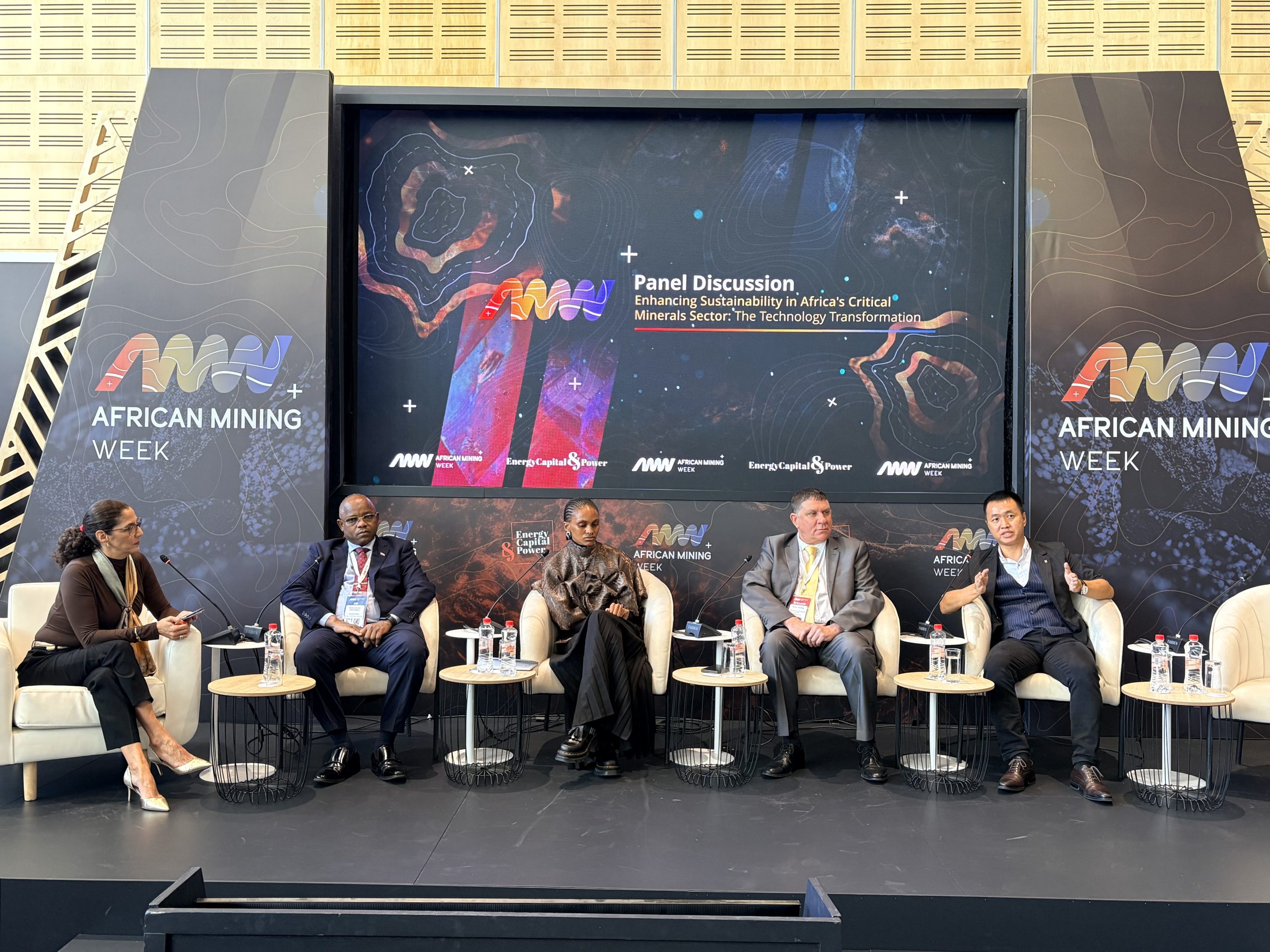
At the final day of African Mining Week, held at the CTICC in Cape Town from 1 to 3 October, government officials, analysts, and industry leaders came together to explore how technology is driving sustainability and competitiveness across Africa’s mining landscape.
The spotlight was on how digital innovation, safety systems, and data transparency are redefining the future of critical minerals on the continent.
Closing the Technology Gap
Ahmed Haron Eltom, Director General at Sudan’s Ministry of Minerals and Head of the Geological Research Authority, underscored the urgent need for accessible and adaptable mining technologies.
“We need technology that can be applied to exploration, evaluation, and environmental protection,” said Eltom. “In many African countries, there’s still a lack of such technology for strategic minerals. That’s a gap we must close.”
Eltom added that data transparency is essential for progress:
“Safety is data. Transparency happens when we share information with regulators, partners, and communities. In Sudan, we’re building systems that allow collaboration and knowledge exchange across African nations.”
Digitalisation: Promise and Precaution
According to Ntebatse Rachidi, Research Analyst at Project Blue, the mining sector’s digital transformation must be implemented thoughtfully.
“Digitalisation brings opportunity but also exposes vulnerabilities,” she said. “If digital systems are introduced without foresight, they risk becoming reactive instead of preventive.”
Rachidi noted that sustainability is now tied to global competitiveness. “Low-carbon producers attract premiums, while high-emission miners risk losing market access. Data and accountability are no longer optional—they’re essential.”
Safety and Sustainability: Two Sides of the Same Coin
For Reece Hanning, Business Development Manager at Hexagon Mining, operator wellbeing is central to technological advancement.
“Safety is our bread and butter,” he said. “Monitoring operator fatigue prevents incidents, reduces fuel use, and cuts emissions. Ultimately, protecting people drives sustainability and profitability.”
Building Responsibility into the Project Lifecycle
Alvin Liu, General Manager of Shandong Xinhai Mining Technology and Equipment Inc, emphasised that sustainability must be integrated from the earliest project stages.
“Safety is the foundation,” said Liu. “Training must come before production, and rehabilitation must begin as soon as a mine closes. Sustainability starts with project design, not after extraction.”
Eltom agreed, citing Sudan’s upcoming 2026–2027 National Minerals Programme, which aims to align development with environmental standards and community wellbeing.
“Expansion cannot come at the expense of people,” he said.
The Road Ahead
The panel reached a unified conclusion: Africa’s mining future depends on balancing growth with responsibility. As global demand for critical minerals rises, technology is emerging not only as a tool for efficiency but as a catalyst for accountability, trust, and long-term competitiveness.
“Transparency is essential to meet ESG benchmarks and maintain investor and community confidence,” Hanning concluded.
While access and adaptation remain challenges, digital innovation is proving to be the transformative force shaping a more sustainable, ethical, and competitive mining industry for Africa.