There is a sharp divide between data-driven businesses and those still guided by instinct or budget constraints. How does good data drive confident decision-making? What is the ROI on investments in data confidence? A new survey from Digitlab reveals how data improves business confidence, and how confidence drives growth.
Business data has never been as available, perhaps even as unavoidable, as it is today. Every expense is tracked. Every transaction is analysed. Each client is described in detail, including their purchasing history and preferences. In many ways, this is a golden age for business insight. Yet there is a growing gap between companies that use this data to sharpen strategy and those that only believe they do.
State of Play
In its third annual State of Digital Survey, Digitlab examines differences between data-driven businesses and others. One key differentiator stands out: confidence. When a company has confidence in its data, it uses that data more effectively, improves results, and outperforms competitors.
Digitlab is a data-driven marketing firm that works with software partners to help clients build their brands and grow in the digital economy. The survey captures the evolving relationship between technology, marketing, and business growth. This year’s insights reveal a market that is increasingly mature, pragmatic, and focused. Rather than chasing every trend, businesses are learning to balance innovation with discipline, building marketing systems that are data-informed, AI-enabled, and human-centred.
Defining the Differences
A significant finding from the survey is the sharp divide between data-driven marketers and those still guided by instinct or budget constraints. This difference can be defined by confidence.
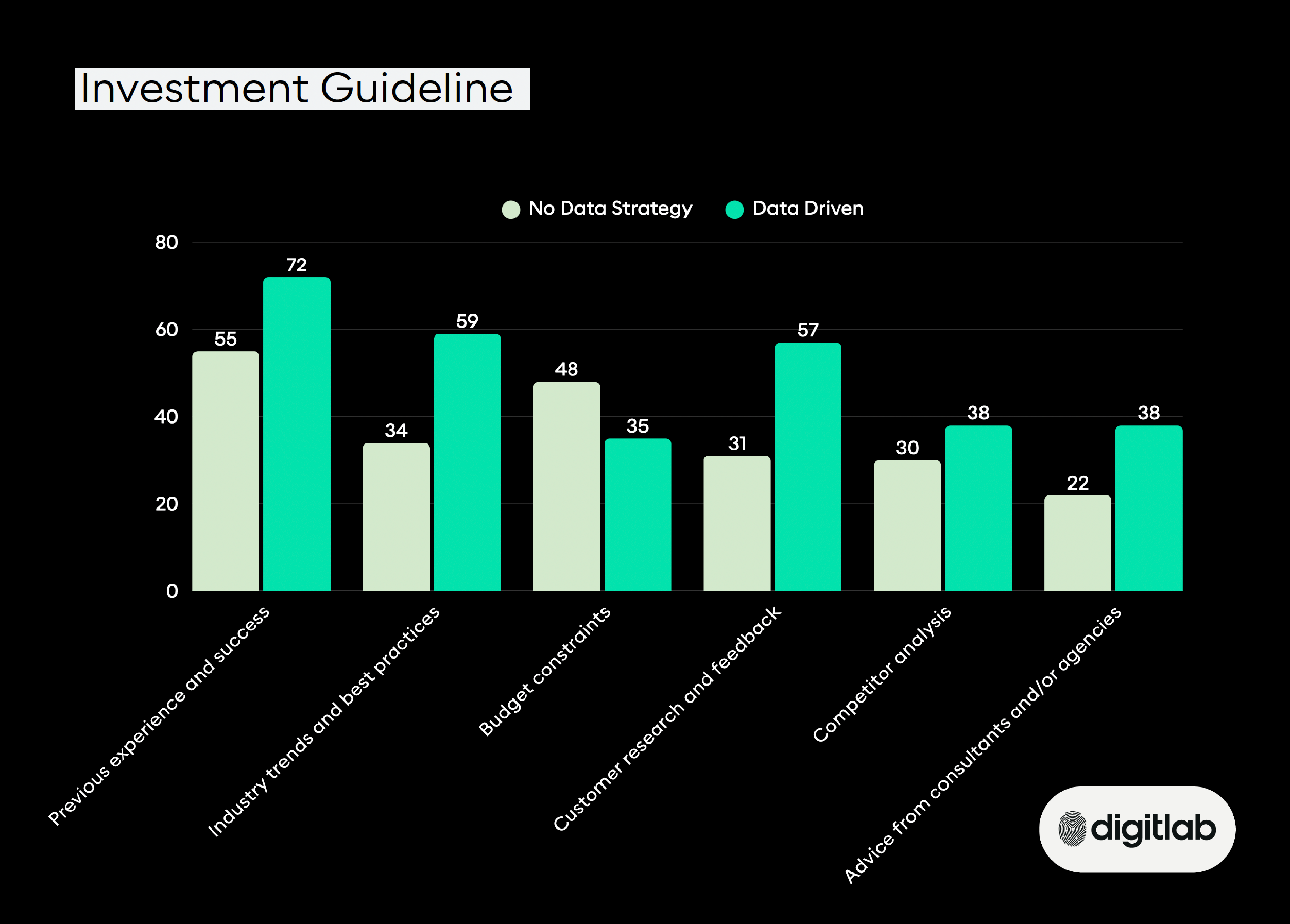
For example, 72% of data-driven organisations report confidence in their prior experience and success, compared with 55% of non-data-driven companies. They also prioritise customer data far more, at 57%, compared to only 31% among less mature peers.
Data replaces hesitation with direction. When businesses have access to clear, validated insights, they can make instinctive yet evidence-backed decisions with confidence that each move supports growth.
Data-driven organisations make investment and strategy decisions with greater clarity and conviction. They use customer feedback, campaign data, and performance insights to validate direction and measure success. This data fluency enables them to move beyond budget constraints, aligning marketing investment with business objectives rather than reacting to competitor behaviour or short-term financial pressures.
By contrast, non-data-driven businesses often rely on fragmented decision-making frameworks. Multiple opinions, external advice, and internal politics dilute focus and slow progress. Without the confidence that comes from solid evidence, marketing strategy becomes defensive, reactive, and overly tied to cost control.
The danger is clear. When budgets, rather than data, drive decisions, businesses lose confidence. Strategy becomes dictated by affordability rather than opportunity. Over time, this leads to declining marketing budgets as performance stagnates.
In essence, data builds conviction. It enables marketers to act decisively, trust their instincts, and remain focused on business goals rather than competitor movements or short-term trends.
Confidence as a Business Tool
When businesses have confidence in their decision-making processes, they innovate more quickly and secure first-mover advantage. They also pivot more quickly when data shows a strategy is not working.
Confidence ensures that sufficient resources are allocated to execution, increasing the likelihood of success. It also supports objective decision-making. Data-driven confidence reduces the risk of errors, including confirmation bias.
Not all data is created equal, however. “Poor-quality data can result in poor decisions, so it’s critical that businesses cleanse, validate, and maintain their data regularly,” notes Digitlab founder Mike Saunders. “They also need to ensure that it’s easily accessible. And most critically, they need to invest in technology and processes to integrate their data sets into a single cohesive source that gives them a clear and realistic view of their operations.”
What’s the ROI?
When it comes to data confidence, the better question may be: what is the cost of not investing? The answer includes lost time, wasted spend, unbalanced product offerings, and poor customer retention.
There is no fixed formula for return on investment in data confidence. It depends on several variables, including resource investment and the nature of the business. However, ROI on data confidence consistently draws from predictable drivers. These include savings from reduced operating costs, efficiency gains from improved decision-making, opportunities for increased revenue, and savings from enhanced risk and compliance management.
As AI becomes more deeply integrated into decision-making, the value of high-quality input data increases. Higher-quality data directly improves the ROI on AI-led technologies.
Striding with Confidence
Businesses that invested early in data confidence have consistently outperformed competitors. It is never too late to start. As AI matures and data becomes more accessible, these investments are also becoming more affordable.
“An investment in data confidence is perhaps the most effective way to grow your business,” says Mike Saunders. “And the correct time to invest is now.”
To register for Digitlab’s ‘Future of Digital’ webinar on 26 November, visit
https://app.livestorm.co/digitlab/insight-2026-the-state-of-digital